Minister says no intent to insult
Dharmendra Pradhan expresses regret as Supreme Court bans NCERT textbook over judiciary row
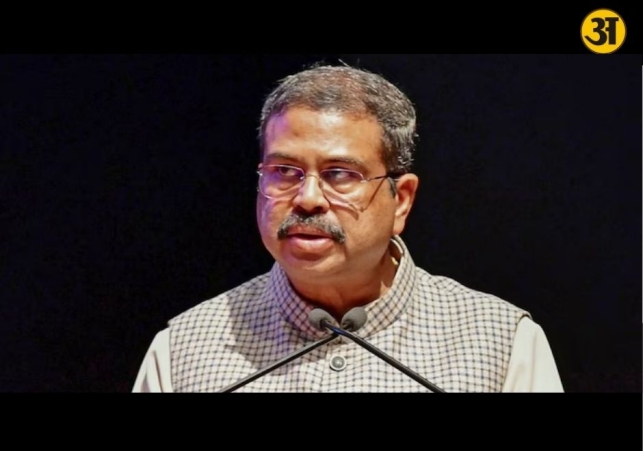
Union Education Minister Dharmendra Pradhan has expressed deep regret over the controversy surrounding a Class 8 NCERT social science textbook that included a chapter on “corruption in the judiciary.” The minister said there was no intention to insult the judiciary and described the situation as unfortunate.
The issue gained national attention after the Supreme Court of India strongly criticised the content and ordered an immediate blanket ban on the textbook. The court also directed that all physical and digital copies be seized and removed from public access.
Speaking on the matter, Pradhan said he was “very sad” about what had happened. He stressed that the government respects the judiciary and would take necessary corrective steps. His remarks came shortly after the apex court made strong observations about the content and its potential impact on public trust in the judicial system.
Court’s strong reaction
The controversy began when the Supreme Court took suo motu notice of the chapter titled “Corruption in the Judiciary” in the Class 8 social science book published by the National Council of Educational Research and Training. The bench described the inclusion as appearing to be a “calculated move to undermine and demean” the judiciary.
A bench headed by Chief Justice Surya Kant, along with Justices Joymalya Bagchi and Vipul M Pancholi, issued sharp remarks during the hearing. The court observed that the content could erode public confidence in the justice delivery system if left unchecked.
The bench went further to say that there appeared to be a “well-orchestrated conspiracy” behind the material. It warned that such content, if proven deliberate, could fall within the scope of criminal contempt because of its potential long-term impact on the institution’s dignity.
In its order, the court imposed a complete ban on the book’s publication, reprinting, and digital circulation. It directed NCERT, along with central and state education departments, to ensure that every copy—whether printed or online—is withdrawn immediately.
The judges also issued show-cause notices to the NCERT director and the secretary of the Department of School Education. They were asked to explain why contempt proceedings should not be initiated against those responsible for the content.
ALSO READ: Pakistan launches retaliatory strikes on Afghanistan, tensions surge
ALSO READ: Pakistan judge’s appointment void after fake degree row
Government and NCERT response
Following the court’s observations, NCERT issued an apology, calling the material “inappropriate.” The council said the chapter would be rewritten in consultation with appropriate authorities to ensure accuracy and sensitivity.
Education Minister Dharmendra Pradhan echoed this conciliatory tone. He clarified that the government had no intention of disrespecting the judiciary and emphasized the importance of maintaining institutional dignity.
Officials indicated that the revised version of the textbook would undergo stricter review processes before being released again. The ministry is expected to work closely with NCERT to prevent similar controversies in the future.
The disputed section in the textbook discussed challenges faced by the judicial system, including corruption concerns, backlog of cases, and shortage of judges. It also mentioned that judges are bound by a code of conduct governing both their professional and personal behaviour.
However, the Supreme Court appeared particularly concerned about how such sensitive institutional issues were presented to young students. The bench stressed that educational material must be carefully framed so that it does not create mistrust toward constitutional bodies.
Legal experts say the episode highlights the delicate balance between academic discussion and institutional respect in school curricula. While textbooks often discuss systemic challenges, the wording and context become crucial when dealing with constitutional authorities.
The court has also warned that any attempt to distribute the banned book—either physically or digitally—would be treated as wilful disobedience of its order. This makes compliance mandatory for publishers, schools, and education departments across the country.
Meanwhile, the Centre has indicated it will fully cooperate with the court’s directions. The focus, officials say, is on correcting the material and ensuring that future textbooks maintain both academic integrity and institutional sensitivity.
The controversy has sparked wider debate in education and legal circles about how governance and accountability topics should be taught to middle-school students. Many observers believe the forthcoming revised edition will be closely scrutinised.
For now, the minister’s statement of regret and NCERT’s apology appear aimed at defusing tensions. Whether further action follows will depend on the Supreme Court’s review of the responses submitted by the concerned authorities in the coming hearings.
Related News